Loading...
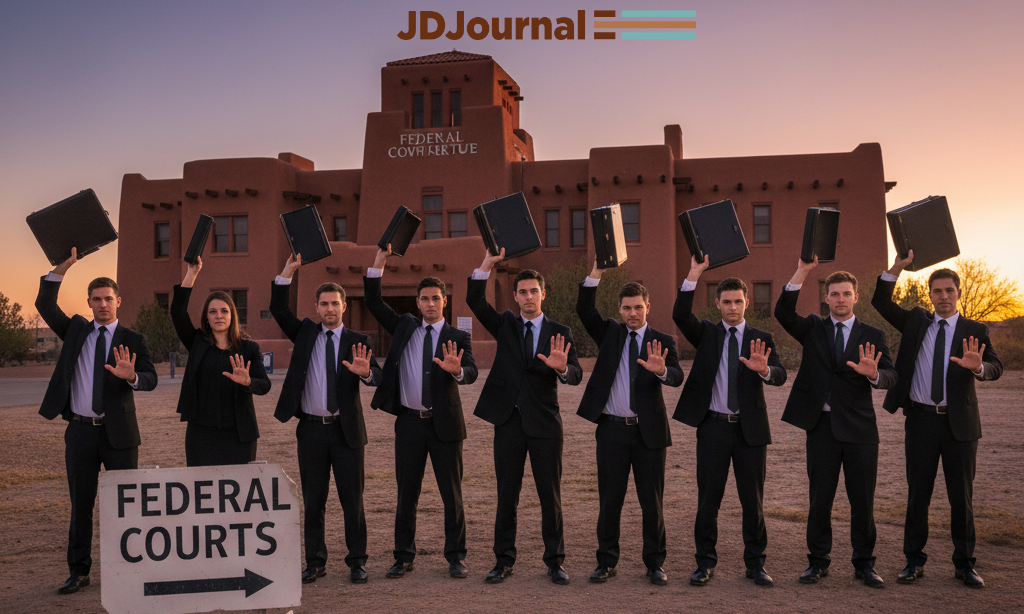
A growing financial crisis within the federal criminal defense system has prompted dozens of New Mexico attorneys to take an unprecedented stand. More than 50 lawyers and contractors who handle court-appointed cases for indigent defendants announced this week that they will no longer accept new assignments, citing a severe and ongoing funding shortage in the federal Criminal Justice Act (CJA) program.
The decision reflects a broader crisis in the nation’s indigent defense system—one that could have sweeping implications for the constitutional right to counsel and the functioning of federal courts.
Funding Collapse Stalls Legal Representation
The problem began on July 3, when the CJA program, which pays private attorneys who represent defendants unable to afford counsel, officially ran out of funds. The shortage was made worse by the prolonged government shutdown that halted congressional appropriations and left critical public programs without financial support.
Under the CJA framework, private attorneys step in when federal public defenders cannot take a case—often due to conflicts of interest, limited staffing, or overwhelming caseloads. In New Mexico, these CJA-panel attorneys form a crucial part of the criminal defense system, representing hundreds of defendants every year.
Without funding, however, the system is collapsing. According to panel chair Ryan Villa, around 40 of the 100 private attorneys on New Mexico’s federal CJA panel signed a letter to the U.S. District Court declaring that they would stop accepting new court appointments until the issue is resolved. Contractors and other professionals who support these defense cases, such as investigators and paralegals, joined the protest.
Lawyers Warn of Ethical and Financial Strain
In their letter to Chief U.S. District Judge Kenneth Gonzales, the attorneys explained that they are owed substantial sums for work already completed and have received no assurance that payments will resume soon. Without reimbursement, many small practices are struggling to remain afloat.

Get JD Journal in Your Mail
Subscribe to our FREE daily news alerts and get the latest updates on the most happening events in the legal, business, and celebrity world. You also get your daily dose of humor and entertainment!!
Ethically, the attorneys said they could not continue accepting new cases knowing that they may not have the resources to provide competent, effective representation. By declining new appointments, they hope to avoid jeopardizing their professional responsibilities to current clients while drawing national attention to what they describe as a “funding crisis of constitutional magnitude.”
National Implications
CJA-panel lawyers handle roughly 40% of all federal criminal cases nationwide, with federal public defenders covering the remainder. The New Mexico protest is among the first large-scale refusals by CJA lawyers in any district, highlighting the deep instability caused by federal budget impasses.

Legal experts warn that if other states follow suit, federal courts could soon face a backlog of unrepresented defendants. This would delay trials, prolong pretrial detention, and undermine the Sixth Amendment’s guarantee of legal counsel for every accused individual.
Judicial Concern and Calls for Action
Chief Judge Gonzales has acknowledged the seriousness of the crisis, emphasizing that the ability of the federal judiciary to operate effectively depends on the proper functioning of the CJA program. “Without adequate funding for defender services,” he warned, “the court’s ability to provide timely and fair proceedings is compromised.”
The Administrative Office of the U.S. Courts (AOUSC), which oversees the CJA program, has urged Congress to act quickly to restore funding. While temporary measures have been discussed, long-term stability remains uncertain. Even if funds are restored following the shutdown, projections show that the CJA budget could again fall short by mid-2026 unless lawmakers take corrective action.
Impact on Defendants and the Justice System
The freeze on new defense appointments has immediate and troubling consequences. Defendants who are arrested and unable to afford private counsel now face longer waits for legal representation. In a state like New Mexico—where federal prosecutions often involve immigration-related offenses and border-area cases—delays can have significant human and legal costs.
Critics argue that this situation represents a constitutional crisis in the making. The landmark 1963 Supreme Court decision Gideon v. Wainwright guaranteed that indigent defendants have the right to counsel, but that right becomes meaningless if no attorneys are available or compensated to take cases.
Civil rights advocates are now calling for emergency federal funding and structural reform to ensure that the CJA system can withstand political and fiscal disruptions in the future.
A System Under Strain
The funding shortage also exposes a deeper issue: the chronic underfunding of public defense across the United States. While prosecutors and law enforcement agencies often receive consistent budgets, defense services—especially for the indigent—remain vulnerable to political and fiscal fluctuations.
For CJA lawyers, the compensation rates, even under normal conditions, often fall below market standards. With delayed or uncertain payments, the work becomes financially untenable for many practitioners, especially those running small firms or solo practices.
A Call for Congressional Intervention
As the situation worsens, federal judges, bar associations, and legal advocates are urging Congress to act. The American Bar Association (ABA) has previously warned that underfunding defense programs undermines not only defendants’ rights but also the integrity of the entire judicial system.
For now, New Mexico’s CJA lawyers remain steadfast in their refusal to take new cases. Their decision underscores both their dedication to ethical practice and the urgent need for a sustainable funding solution. Without intervention, they warn, the federal criminal justice system could soon face a crisis that affects defendants, courts, and public confidence in equal justice under law.
Stay informed about key developments in the U.S. legal system with JDJournal.com. For lawyers seeking new career opportunities, visit LawCrossing.com — the leading job platform connecting legal professionals to top law firms and organizations.