Loading...
At the Association of Corporate Counsel (ACC) annual meeting in Philadelphia, a growing and unnerving topic dominated conversations among in-house legal leaders: the rapid rise of deepfakes. Once a novelty of internet culture, these hyper-realistic fake videos and audio clips—created through artificial intelligence—are quickly emerging as a major risk for corporations worldwide.
During one session, attendees were greeted by a startling example: a video featuring the image and voice of former U.S. President Ronald Reagan. The digital Reagan addressed the audience directly, saying, “Hello there friends, Ronald Reagan here, or at least I think I am. With all this deepfake business, it’s hard to be sure these days.” The lifelike accuracy of the AI-generated clip underscored how difficult it’s becoming to distinguish reality from fabrication.
The Growing Corporate Threat
For corporate legal departments, deepfakes represent far more than a technological curiosity—they are a serious operational and reputational hazard. In-house lawyers are increasingly warning their executive teams and boards about the potential for AI-generated media to disrupt markets, damage credibility, and even facilitate fraud.
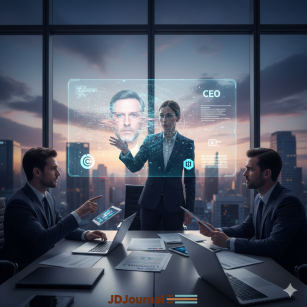
Deepfakes can mimic anyone’s voice or face with stunning precision, meaning bad actors could impersonate CEOs, general counsel, or senior executives to issue fake statements, manipulate markets, or authorize fraudulent transactions. A single deepfake video circulating on social media could erode shareholder confidence, trigger a public relations crisis, or even move stock prices within hours.
In-house attorneys are now tasked with a difficult question: how do you prove a video or voice message isn’t real once it’s gone viral?
Fraud, Defamation, and Legal Exposure
Deepfakes expose companies to several interconnected legal and regulatory risks:

Get JD Journal in Your Mail
Subscribe to our FREE daily news alerts and get the latest updates on the most happening events in the legal, business, and celebrity world. You also get your daily dose of humor and entertainment!!
- Fraud and Financial Loss: Cybercriminals are using deepfake voice technology to impersonate executives and instruct employees to transfer funds or confidential data. A well-documented 2019 case involved criminals using AI-generated audio of a CEO’s voice to trick an employee into wiring $243,000 to a fraudulent account.
- Reputational Damage: A fake video of a senior leader making inappropriate or offensive comments could destroy consumer trust or spark public outrage—even if proven false later.
- Market Manipulation: False statements attributed to executives or board members could impact trading prices, potentially exposing companies to SEC inquiries or shareholder suits.
- Defamation and Liability: If a deepfake harms another company or individual, questions arise about who bears responsibility—particularly if the manipulated content is hosted or shared on corporate channels.
- Data Privacy and Security: Deepfake creators often use publicly available images and recordings, which can violate privacy laws or intellectual property rights.
Why In-House Lawyers Are Sounding the Alarm
What makes deepfakes uniquely dangerous is their accessibility. Once confined to AI labs, the technology is now publicly available through easy-to-use tools and apps. Open-source models can generate realistic voice clones or face-swapped videos in minutes—no technical expertise required.
The explosion of remote work and virtual communication since the pandemic has also expanded the attack surface. Employees, vendors, and clients increasingly rely on video calls and digital collaboration platforms, creating more opportunities for deception. “We’re entering an era where trust can no longer rely solely on seeing or hearing,” one corporate counsel at the ACC conference remarked.

Moreover, regulatory frameworks haven’t yet caught up. While U.S. states like Texas, California, and New York have introduced laws targeting deepfake misuse—particularly in election interference and explicit content—corporate-specific guidance remains sparse. As a result, general counsel are taking a proactive stance, treating deepfakes as a cybersecurity and governance issue rather than waiting for legislative clarity.
Proactive Measures for Legal Departments
In-house legal teams are increasingly working with IT, compliance, and communications departments to develop response strategies. Experts at the conference recommended a multi-layered approach:
- Board-Level Awareness: Educate directors and executives on the potential impact of synthetic media. Board discussions on cybersecurity and reputation management should now include deepfake scenarios.
- Verification Protocols: Implement “trust but verify” procedures for voice and video instructions involving financial or strategic decisions. Require multi-factor confirmation before acting on sensitive requests.
- Media Policies: Update corporate communications policies to address synthetic content—specifying how suspected deepfakes should be reported, analyzed, and handled publicly.
- Employee Training: Teach employees to recognize red flags—such as unnatural facial movements, mismatched lighting, or distorted audio—and establish a clear escalation process.
- Crisis Management Plans: Incorporate deepfake incidents into crisis communication protocols, including rapid-response steps for legal, PR, and social media teams.
- Technology Solutions: Explore AI-based detection tools capable of analyzing digital fingerprints, pixel inconsistencies, and metadata to flag manipulated content.
The Legal Industry’s Role in the AI Era
Corporate legal departments are also preparing for broader implications of synthetic media. Beyond fraud prevention, lawyers are studying how deepfakes intersect with intellectual property, labor law, data privacy, and AI governance.
Some firms are already developing deepfake detection and authentication clauses in contracts, requiring vendors and partners to verify the integrity of media shared during business operations. Others are advocating for clearer federal regulations around digital impersonation and AI accountability.
The consensus at the ACC event was clear: while deepfakes are born from innovation, they are evolving into one of the most complex legal risks of the decade. As AI technology accelerates, the ability to manipulate audio and visual reality threatens the core of corporate trust—and in-house counsel are stepping up as first responders.
Conclusion: The New Reality of Corporate Risk
For companies, deepfakes represent more than a fleeting cybersecurity concern—they are a test of institutional credibility. The next major corporate crisis might not stem from a data breach or internal scandal, but from a convincingly fake video that millions believe is real.
Stay informed about emerging legal technologies and AI-related risks. Visit LawCrossing.com to explore legal roles in cybersecurity, privacy law, and corporate compliance—fields shaping the next generation of in-house legal strategy.