Loading...
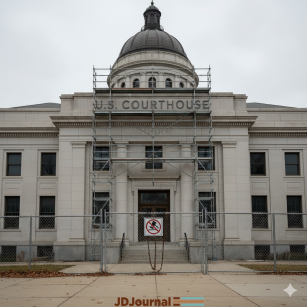
The federal judiciary is preparing to furlough employees for the first time in nearly 30 years as the ongoing government shutdown depletes the funds that have sustained court operations since early October. Unless Congress passes new appropriations legislation or a temporary funding measure soon, thousands of court employees may be sent home without pay starting next week—an unprecedented disruption for one of the nation’s core institutions of justice.
Courts Running Out of Options
Since the government shutdown began, the U.S. court system has operated using reserve funds, including filing fees, carryover balances, and other non-appropriated sources. However, according to the Administrative Office of the U.S. Courts (AOUSC), those reserves are nearly exhausted. Chief Judge Robert Conrad, who heads the AOUSC, informed federal court administrators this week that the judiciary’s limited funds are expected to run out by October 21.
In a memo circulated to court officials nationwide, Conrad instructed administrators to begin “orderly shutdown activities” and issue furlough notices to nonessential employees. The directive marks a sobering moment for the judiciary, which has managed to stay fully operational through previous funding crises, including the record 35-day shutdown in 2018–2019.
This time, however, the judiciary’s financial flexibility is far more limited. Rising operational costs, staff expansions, and inflation have eroded the buffer that once allowed courts to continue normal operations during funding lapses.
Who Will Be Affected
While judges’ salaries are constitutionally protected and therefore exempt from furloughs, the majority of court employees—including clerks, administrative support staff, IT workers, and some probation officers—are not. These employees could face unpaid leave until Congress restores funding.
Essential functions will continue under the judiciary’s contingency plans. Criminal proceedings, emergency injunctions, and other constitutionally mandated activities will still move forward. But many civil cases—especially those involving federal agencies whose lawyers are also furloughed—will likely face further delays.

Get JD Journal in Your Mail
Subscribe to our FREE daily news alerts and get the latest updates on the most happening events in the legal, business, and celebrity world. You also get your daily dose of humor and entertainment!!
Court filings, case management, and public access to records could all slow significantly as the system scales down to minimal operations. Some courts have already begun prioritizing criminal and time-sensitive matters, while others are drafting modified schedules or reducing operating days.
Historical Context: First Furloughs Since 1995
The judiciary has not faced this level of disruption since the 1995–1996 government shutdown under President Bill Clinton. During that period, approximately 20% of federal court staff were furloughed, leading to case backlogs and delayed hearings across the country.

By contrast, during the 2019 shutdown, the judiciary managed to keep staff fully paid by relying on fee balances and cost-saving measures. That cushion no longer exists today.
“The courts have always prided themselves on being able to weather a funding storm better than most agencies,” said a former federal court administrator. “But the reality is that our reserve system was never meant to sustain a shutdown of this length with modern budget pressures.”
Judicial Pay vs. Administrative Reality
Although Article III of the Constitution ensures that judges’ compensation cannot be reduced while they serve, this safeguard does not extend to the court’s broader workforce. Judicial operations depend heavily on administrative staff, law clerks, and other support personnel who may soon be without income.
Judges may continue presiding over hearings and issuing rulings, but without full administrative assistance, their capacity to process filings, schedule hearings, or prepare written opinions could be significantly hampered.
Court security and IT maintenance—both critical to daily operations—are also at risk of temporary staffing reductions. The U.S. Marshals Service, which provides security for courthouses, has not yet indicated whether its staffing will be affected, but coordination between departments could suffer.
Nationwide Impact on Legal Proceedings
The potential furloughs will ripple far beyond the courthouse walls. Litigants, attorneys, and law firms could face weeks or even months of procedural delays, especially in federal civil cases. Several judges have already issued standing orders allowing limited extensions in civil matters involving government attorneys.
The Administrative Office of the U.S. Courts has confirmed that jury payments will continue temporarily, but the ability to convene new grand juries or sustain long-running criminal trials could be compromised if staff availability decreases.
The Department of Justice has requested stays in numerous ongoing cases involving federal defendants, citing limited staffing and budgetary constraints. However, not all courts have granted these requests, with some judges insisting that justice cannot be indefinitely delayed.
Constitutional Tensions
The looming furloughs highlight the tension between constitutional mandates and fiscal realities. The judiciary must uphold rights such as the Sixth Amendment’s guarantee of a speedy trial while operating with minimal funding and personnel.
Legal experts warn that if the shutdown extends much longer, the courts could face constitutional challenges from defendants whose trials are delayed due to the lack of staff or resources.
“This situation puts the judiciary in an impossible position—bound by constitutional duty but constrained by the lack of appropriations,” said a former federal prosecutor. “It’s a collision between law and politics that directly affects people’s access to justice.”
Outlook: A System Under Strain
As the shutdown continues with no immediate resolution in sight, court leaders are weighing how to minimize disruption while complying with federal law. Some districts are considering shortened workweeks or partial staffing models to stretch remaining funds as long as possible.
Still, without congressional action, furloughs appear inevitable. For the first time in nearly three decades, the U.S. courts—often viewed as the government’s most stable and apolitical branch—are confronting the economic consequences of political gridlock.
As federal court operations slow down, many attorneys and legal professionals are exploring new opportunities outside government service. Stay ahead of the curve—discover top legal jobs and insights on LawCrossing.com, the nation’s premier legal career platform.