Loading...
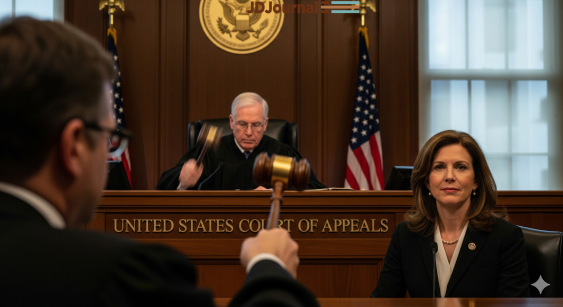
In a decision with far-reaching implications for constitutional law, intellectual property governance, and the balance of powers within the federal government, the U.S. Court of Appeals for the District of Columbia Circuit has ordered the reinstatement of Shira Perlmutter as Director of the U.S. Copyright Office.
Perlmutter, who was removed from her position in May 2025 by the Trump administration, will resume her role immediately under the appellate court’s temporary order. The ruling, issued by a divided three-judge panel, described her dismissal as “likely unlawful” and characterized the circumstances surrounding her termination as “extraordinary.”
Background of the Removal
On May 10, 2025, Perlmutter was abruptly dismissed by the White House via email. The decision came just days after the Copyright Office released a detailed report examining the unauthorized use of copyrighted works in the development of generative artificial intelligence models. That report warned of significant risks to copyright owners, sparking criticism from technology companies but earning support from many creators and rights advocates.
Soon after her dismissal, administration officials made public statements downplaying the office’s findings, suggesting that the executive branch intended to take a different approach to AI-related copyright issues. This fueled accusations that her removal was politically motivated, designed to bring the Copyright Office into closer alignment with the administration’s technology policy goals.
On May 22, 2025, Perlmutter filed a lawsuit challenging her removal. She argued that her termination undermined statutory protections meant to shield the Copyright Office from undue political interference. Her suit contended that the dismissal not only threatened her independence as director but also jeopardized Congress’s constitutional oversight powers.
A federal district court initially rejected her request for reinstatement, finding she had not demonstrated “irreparable harm” sufficient to warrant emergency relief. But the appeals court disagreed, reviving her case and allowing her to return to office while litigation continues.

Get JD Journal in Your Mail
Subscribe to our FREE daily news alerts and get the latest updates on the most happening events in the legal, business, and celebrity world. You also get your daily dose of humor and entertainment!!
The Appeals Court Ruling
In its 2–1 decision, the appellate panel ruled in favor of Perlmutter, emphasizing that her firing raised serious constitutional and statutory concerns.
The majority opinion noted that the Copyright Office, though part of the Library of Congress, holds unique responsibilities that bridge the executive and legislative branches. Removing its director without proper justification, the court warned, risked violating the separation of powers doctrine by allowing the executive branch to exert excessive influence over an office intended to support Congress.

The court further described Perlmutter’s termination as an “extraordinary” event that demanded judicial intervention to preserve institutional integrity. By reinstating her on a temporary basis, the panel sought to prevent further erosion of congressional oversight while the full case is resolved.
Statements and Reactions
Perlmutter’s legal counsel, Brian Netter, praised the ruling as a critical victory.
“This decision reinforces the rule of law, safeguards the independence of Congress, and ensures that specialized offices like the Copyright Office can continue to operate without political coercion,” Netter said following the judgment.
As of Wednesday afternoon, the White House had not issued a formal response to the ruling. The Copyright Office itself also declined to comment, citing the ongoing litigation.
Implications for Copyright Law and Governance
The case comes at a time when copyright law is at the center of some of the nation’s most contentious policy debates. The rapid rise of generative AI has triggered disputes between tech companies, artists, publishers, and lawmakers over how intellectual property should be protected in the digital age.
The Copyright Office plays a pivotal role in these debates, serving as both a legal advisor to Congress and a regulatory authority for registration and policy guidance. If the director of the office can be dismissed at will by the executive branch, critics argue, the office’s credibility and independence could be permanently undermined.
By restoring Perlmutter to her post, the appeals court has temporarily reinforced the office’s autonomy and reaffirmed its critical function in shaping the nation’s copyright framework.
What Comes Next
The reinstatement order is temporary. The litigation over whether Perlmutter’s dismissal was legally permissible will continue in the lower courts, and the administration could still appeal for further review. The case may ultimately reach the Supreme Court, where the justices would confront questions about statutory protections, separation of powers, and the scope of executive authority.
For now, however, Perlmutter’s return ensures continuity at the Copyright Office during a period of major upheaval in intellectual property law. Her leadership will once again guide ongoing efforts to address how copyrighted materials are used in AI development, digital media, and emerging technologies.
Broader Constitutional Significance
Beyond copyright, the case highlights the broader struggle over the independence of government institutions designed to serve Congress. Legal scholars note that this dispute could set a precedent for how directors of quasi-independent agencies are treated in future administrations.
If the courts ultimately side with Perlmutter, it would strengthen legal safeguards for agency leaders whose work is meant to remain free from executive branch interference. If the administration prevails, however, it could expand presidential influence over agencies traditionally insulated from political control.
Conclusion
The reinstatement of Shira Perlmutter is more than a personnel dispute—it is a pivotal moment in the ongoing battle over checks and balances in American governance. As litigation proceeds, the case will shape not only the future of the Copyright Office but also the boundaries of executive power in relation to Congress.
JDJournal will continue to provide updates as this high-profile case develops and as its consequences ripple across both the legal and policy landscapes.